Happy Arbor day
oct 31
This blog contain information about plants ,trees plus many interesting things about its physiology ,structure,anatomy and its pest and disease,,,enjoy
Blog Archive
Oct 31, 2011
Oct 26, 2011
Corn smut
Corn smut is a fairly common disease caused by the fungus Ustilago maydis. It's most common on sweet corn but can also occur in pop corn and field corn. Corn smut can infect various parts of the corn plant including stalks, leaves, and tassels, but it is most apparent when it infects the ears. The fungus infects developing corn kernels, causing the formation of galls which can grow to several inches in diameter. These galls have a silvery gray outer coating of corn tissue, so they look like inflated corn kernels. Inside the gall is a mass of black fungus. When the galls mature the outer layer dries and cracks open, releasing powdery black spores to spread by wind and rain splashing. Warm, wet weather promotes the development and spread of the fungus.
Labels:
smut
Oct 24, 2011
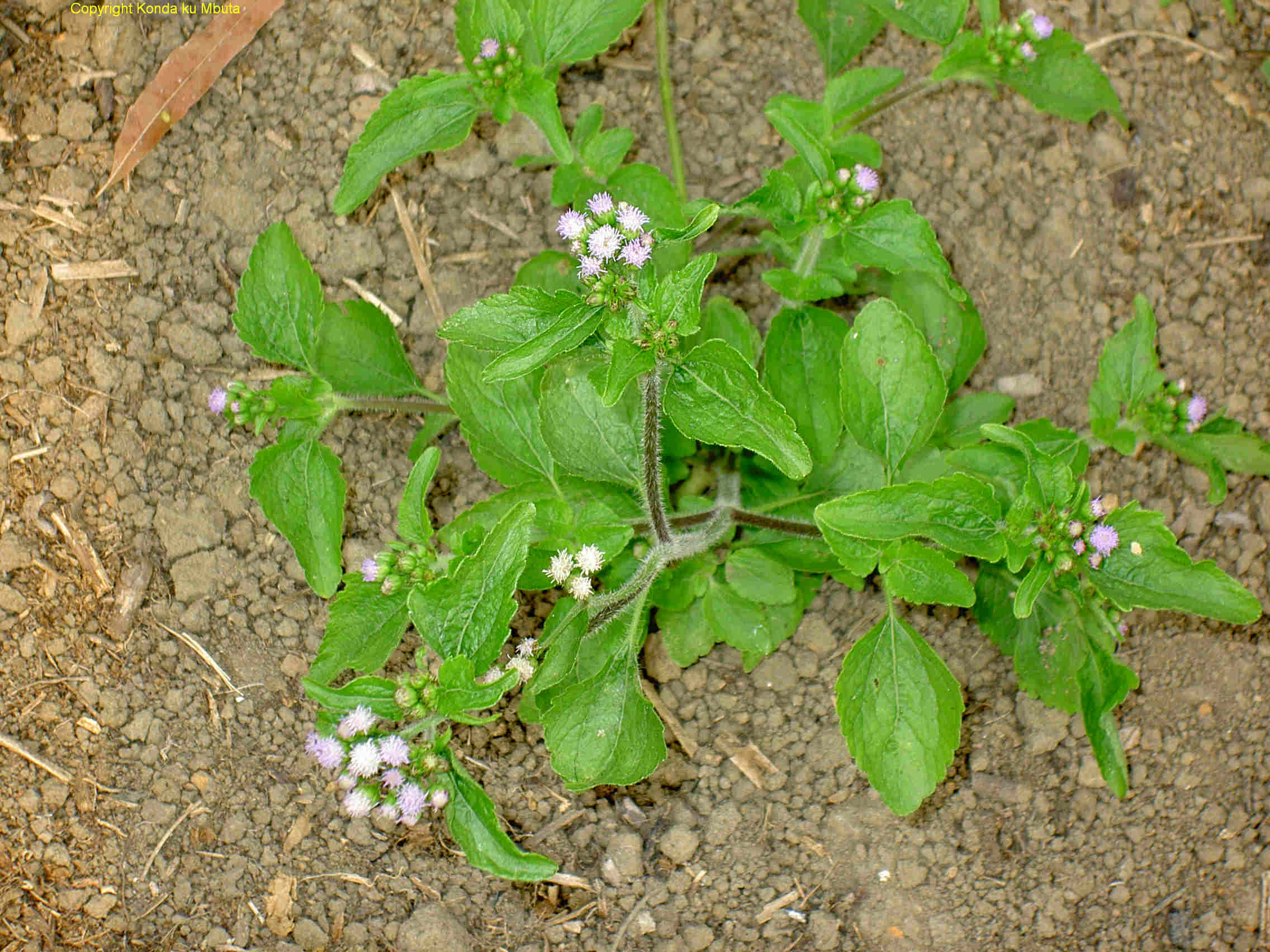
Weeds as alternative hosts for Ageratum conyzoides
Weeds can act as alternative hosts of many important crop pathogens.Ageratum conyzoides is a common weed in Vietnam, growing within crops, in fallow areas between crops and alongside footpaths. It is an alternative host of several important pathogens and provides a source (reservoir) of inoculum of these pathogens to infect new crops. If this weed is present, the farmer can lose the benefit of crop rotation for controlling pathogens in the soil.Ageratum conyzoides is a host of Ralstonia solanacearum (which causes bacterial
wilt), root knot nematode and possibly aster yellows, which is a disease caused by a phytoplasma transmitted by leaf hopper vectors to susceptible crops such as asters,potatoes, carrots and strawberries
Labels:
Ageratum conyzoides,
weed
All About Trees
There are two different types of trees: non-flowering trees that have seeds that are not enclosed, and flowering trees that have seeds that are enclosed. An example of a non-flowering tree would be an pine tree. An example of a flowering tree would be a fruit tree, such as peach or orange.Flowering trees are deciduous; that is, they shed their leaves every year. Other trees are conifers; they grow new leaves before shedding old ones, and stay green all year
round (“evergreen”).
Trees consist of roots, trunk (stem),branches, twigs, and leaves. The tallest trees in the world are the redwoods ofCalifornia, which can grow to be 379 ft (115.55 m) in height.
Oct 21, 2011
All About Non-Flowering Plants

Plants without flowers are called non-flowering plants, or gymnosperm.While they do produce seeds, the seed is not enclosed in a flower (and eventually a fruit) the way seeds are in flowering plants.
Non-flowering plants are very common, and include conifers (evergreens), cycads, and ginkgo. Popular types of conifers include fir and pine trees. These trees are characterized by sharp needles and produce cones that hold the seeds. (See picture: pine cones and needles)
Cycads are tropical plants with compound leaves and a sturdy
trunk. Ginkgo trees are one of the oldest kinds of trees known to
exist. They are usually very tall and have unique fan-shaped leaves
Labels:
Cycads,
evergreens,
non-flowering plants
All About Flowering Plants
All green plants that have flowers are called flowering plants. Scientists have grouped these according to the number of seed leaves found in each plant.
Monocots (or monocotyledons) have one seed leaf; dicots (or dicotyledons)
have two seeds leaves. These leaves provide the food
the young plant needs until it can make its own food. Flowering
plants consist of four main parts: (1) roots, (2) stem, (3) leaves, and
(4) flowers.
Monocots (or monocotyledons) have one seed leaf; dicots (or dicotyledons)
have two seeds leaves. These leaves provide the food
the young plant needs until it can make its own food. Flowering
plants consist of four main parts: (1) roots, (2) stem, (3) leaves, and
(4) flowers.
Labels:
dicots,
Flowering Plants;Monocots
About the Plant Kingdom
The Plant Kingdom is a way to classify (or organize) plants. They are divided into groups based on the traits they have in common.
Scientists change the way plants are classified from time to time,
when they discover new types of plants or learn new things about
plants.
The two main groups are vascular plants (plants that use stems and veins to transport food and water), and non-vascular plants (plants with no roots, stems, or leaves).
Vascular plants can divided into smaller groups, one of which is
seed plants. This group includes flowering and non-flowering plants.
Flowering plants include monocots (one seed leaf) and dicots (two
seed leaves). The non-flowering plants can also be divided into
several groups, including cycads, conifers, and ginkgo.
Scientists change the way plants are classified from time to time,
when they discover new types of plants or learn new things about
plants.
The two main groups are vascular plants (plants that use stems and veins to transport food and water), and non-vascular plants (plants with no roots, stems, or leaves).
Vascular plants can divided into smaller groups, one of which is
seed plants. This group includes flowering and non-flowering plants.
Flowering plants include monocots (one seed leaf) and dicots (two
seed leaves). The non-flowering plants can also be divided into
several groups, including cycads, conifers, and ginkgo.
Labels:
Plant Kingdom,
Vascular plants
What are plants?
Plants are living things that are made up of cells. They need air,water, soil, and sunlight to live. They cannot move from place to
place, but their leaves move to catch the sun and their roots move towards
water. Their seeds can be carried by animals or blown by the
wind.
We get food from all different parts of the plant: flowers, fruits, vegetables,
seeds, nuts, stems, and leaves. Grass gives us a cool, soft place to
walk. Some plants give us medicine, and trees are used to make
paper and furniture.
Over 270,000 species of plants have been identified
and classified, but scientists believe that there are
millions more waiting to be discovered
Labels:
plants
Oct 17, 2011
Sultan Qaboos flower
large green house contain flower named by His Majesty sultan Qaboos sultan of Oman.
This green house located in AlJabal Al Akdar in Riad aLjabal farm.
Labels:
Sultan Qaboos flower
Oct 9, 2011
Sep 27, 2011
The Concept of Plant Disease
The normal physiological functions of plants are disturbed when they are affected by pathogenic living organisms or by some environmental factors. Initially plants react to the disease causing agents, particularly in the site of infection. Later, the reaction becomes more widespread and histological changes take place. Such changes are expressed as different types of symptoms of the disease which can be visualized macroscopically. As a result of the disease, plant growth in reduced, deformed or even the plant dies.
When a plant is suffering, we call it diseased, i.e. it is at ‘dis-ease’. Disease is a condition that occurs in consequence of abnormal changes in the form, physiology, integrity or behaviour of the plant. According to American Phytopathological Society (Phytopathology 30:361-368, 1940), disease is a deviation from normal functioning of physiological processes of sufficient duration or intensity to cause disturbance or cessation of vital activities. The British Mycological Society (Trans. Brit. Mycol. Soc. 33:154-160, 1950) defined the disease as a harmful deviation from the normal functioning of process. Recently, Encyclopedia Britannica (2002) forwarded a simplified definition of plant disease. A plant is diseased when it is continuously disturbed by some causal agent that results in abnormal physiological process that disrupts the plants normal structure, growth, function or other activities. This interference with one or more plant’s essential physiological or biochemical systems elicites characteristic pathological conditions or symptoms.
Koch's Postulates
Koch was one of the original researchers into tuberculosis, in the 19th century. In an attempt to define what an infectious disease actually is, he formulated his famous postulates, which now bears his name.
Basically, if
1. An organism can be isolated from a host suffering from the disease
and
2. The organism can be cultured in the laboratory
and
3. The organism causes the same disease when introduced into another host
and
4. The organism can be re-isolated from that host
then
The organism is the cause of the disease and the disease is an infectious disease.
There is an implicit assumption in step three, namely that the other host must have a genetic make-up that causes it to react to the organism in the same way as the original host.
Also, these steps do not apply to all infectious disease. Notably, the bacterium causing leprosy, Mycobacterium leprae, cannot be cultured in the laboratory. However, leprosy is still recognised as an infectious disease.
Labels:
Koch's Postulates
Subscribe to:
Posts (Atom)