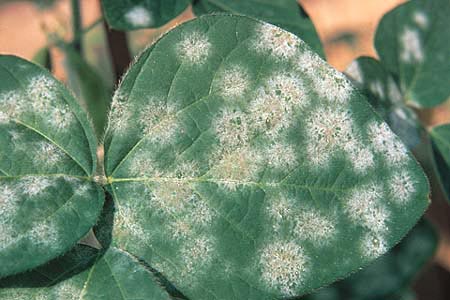
Fungi can't make their own food, so they must somehow get it from other organisms, living or dead. Some fungi can digest things like dead leaves and wood. Others set up mutually beneficial relationships with living plants But a third group discovered how to attack plants and steal food from them.

These 'pathogenic' or disease-causing fungi get inside the plant either by making a hole in its skin (epidermis), or by growing in through the plant's breathing holes (stomata). Then they either poison and kill the plant cells before absorbing food from them, or simply steal nutrients from the living cells.
The spores of some fungi come through the air and attack leaves, making dead spots or even killing the whole leaf. Some fungi live in the soil and enter roots. They can either block the water-conducting cells or kill them, causing the plant to wilt. In many cases the plants is seriously damaged or may even die. So such pathogenic fungi can threaten our crops. The study of these fungi is called plant pathology.